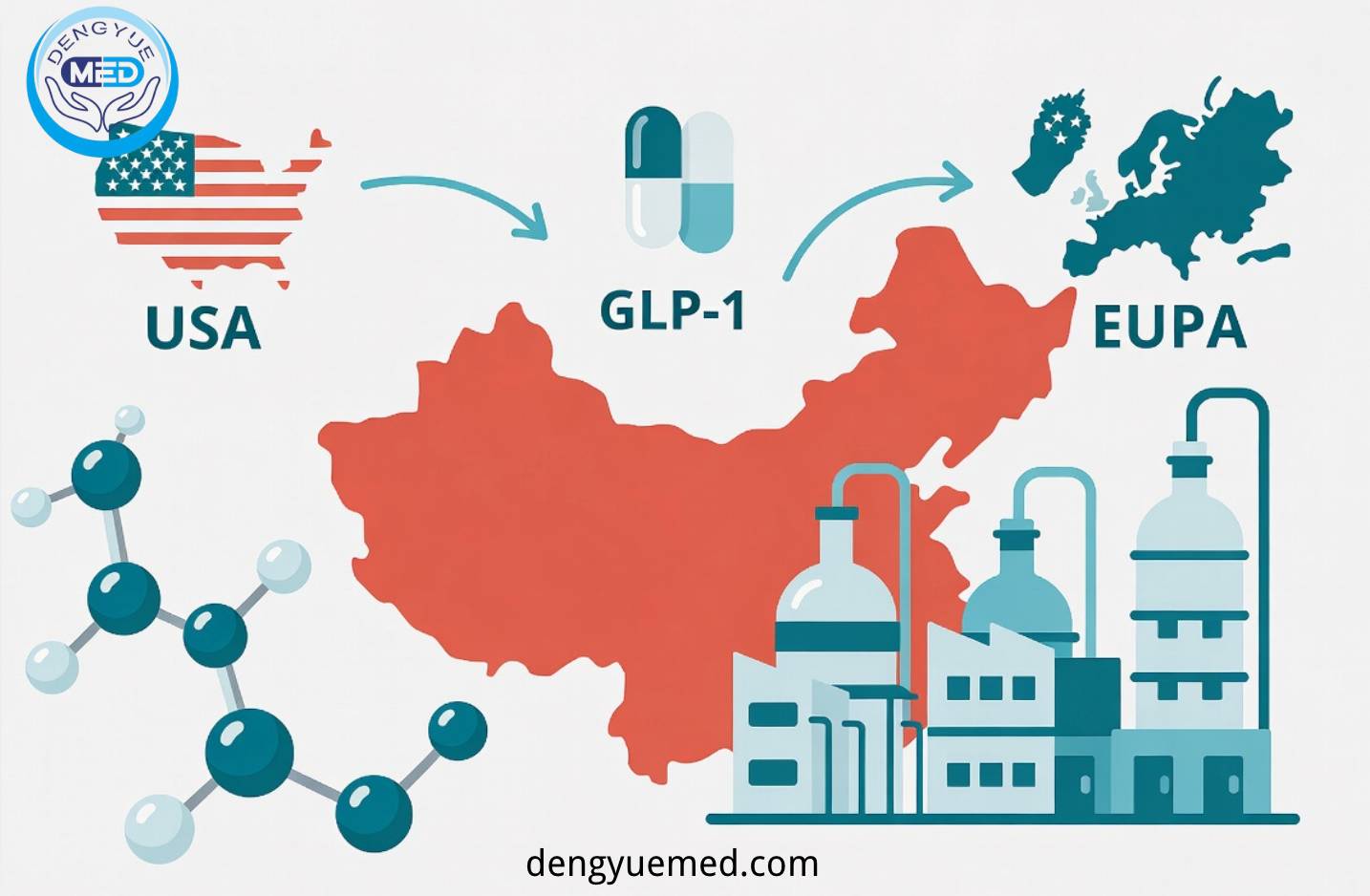
As GLP-1 demand explodes globally, China is rapidly becoming one of the world’s most important peptide manufacturing hubs.
Why Are More and More Pharmaceutical Companies Worldwide Beginning to Rely on China's Peptide Production Capacity?
In the context of the accelerated restructuring of the global pharmaceutical supply chain, DengYue Pharmaceutical, as a professional platform specializing in the import and export of new specialty drugs, continues to pay close attention to industry developments in the peptide field.
Over the past few years, the global explosion of GLP-1 class weight-loss drugs has not only transformed the obesity and diabetes treatment markets, but is also reshaping the entire peptide pharmaceutical industry chain.
From Novo Nordisk's semaglutide (Ozempic/Wegovy) to Eli Lilly's tirzepatide (Mounjaro/Zepbound), and then to the next-generation triple agonist Retatrutide, global pharmaceutical companies are accelerating their layout in the GLP-1 era.
In this fierce competition, a key yet often overlooked issue is becoming increasingly prominent:
Who can truly provide sufficient scale of high-quality peptide API production?
More and more international pharmaceutical companies are turning their attention to China.
This is not only because of cost advantages, but also because the global GLP-1 supply chain has entered the:
"industrialized capacity competition" stage.
China has become one of the regions with the most concentrated peptide manufacturing capabilities and the fastest capacity expansion in the world.
GLP-1 Heatwave: What Is Truly Scarce Is Production Capacity
Many people believe that the core of GLP-1 competition lies in clinical data, weight-loss efficacy, and patent protection.
However, as global demand grows explosively, the industry has gradually realized that what truly limits market expansion is production capacity.
GLP-1 drugs belong to complex peptide drugs, and their production difficulty is far higher than that of traditional small molecule chemical drugs.
Long-chain structure, high purity requirements, large-scale solid-phase synthesis (SPPS), strict impurity control, and cold chain logistics all place extremely high demands on the manufacturing system.
The real challenges facing the global peptide industry include:
- Long production cycles
- Insufficient historical capacity preparation
- Extremely high purity and scale-up requirements
According to market data, global peptide API production is expected to surge from approximately 265 tons in 2025 to 855 tons in 2031.
At the same time, the GLP-1-related CDMO market is expanding rapidly at a compound annual growth rate of 12–13%.
Why Has China Become the Global Peptide Manufacturing Center?
International pharmaceutical companies have discovered that China not only has significant cost advantages, but also possesses outstanding industrialized scale and engineering speed.
1. Complete Industry Chain Cluster
China has formed a complete ecosystem from upstream amino acid raw materials, peptide synthesis, API production, formulation filling, and packaging.
This cluster effect has greatly improved expansion efficiency and supply chain stability.
2. Leading CDMO Capacity Expansion Speed
After the GLP-1 explosion, "who can provide capacity the fastest" has become the primary concern of pharmaceutical companies.
Chinese companies have demonstrated extremely strong execution capabilities in:
- Building new workshops
- Expanding purification systems
- Increasing lyophilization capacity
- Scaling commercial peptide manufacturing
Since 2024, WuXi AppTec has continued expanding peptide facilities in Changzhou and Taixing, while Aurisco Pharmaceutical has accelerated investment into cGMP peptide workshops.
3. Talent and Engineering Experience
Over the past twenty years, China has cultivated a large number of peptide engineering, GMP, and API manufacturing professionals.
This enables Chinese companies to respond quickly to global demands in:
- Process optimization
- Impurity control
- Commercial scale-up
Representative companies include:
- WuXi AppTec
- Hybio Pharmaceutical
- Chinese Peptide Company
These firms have established deep cooperation with international pharmaceutical companies for commercial GLP-1 manufacturing.
Strategic Transformation of Global Pharmaceutical Supply Chains
In the past, many multinational pharmaceutical companies preferred localized production in Europe and the United States.
However, the demand growth rate in the GLP-1 era has far exceeded expectations.
The core industry question has become:
- Who can provide stable supply?
- Who can expand production quickly?
- Who can guarantee long-term delivery?
More companies are now cooperating with Asian CDMOs and establishing dual supply chain systems.
This is no longer only about cost optimization.
It is increasingly about:
Supply chain security.
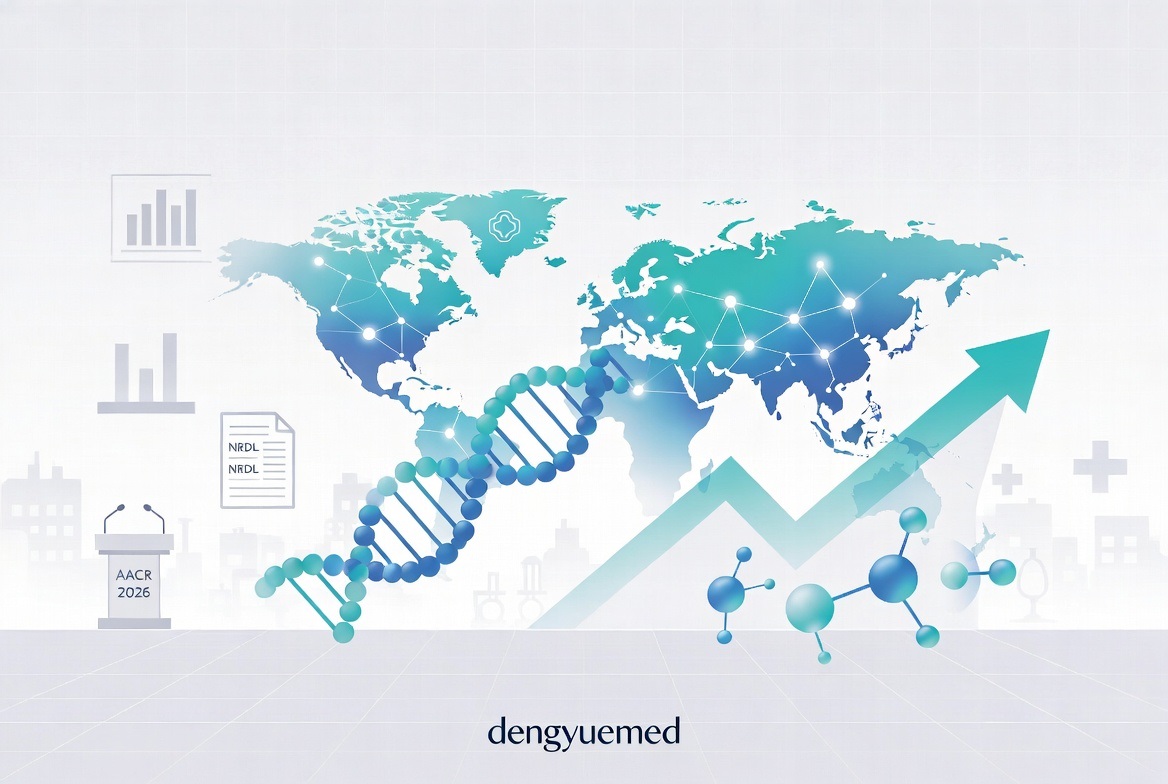
In 2025, the peptide API manufacturing market has reached approximately $86.2 billion and is expected to grow to nearly $139.5 billion by 2030.
The Asia-Pacific region — especially China — is becoming the fastest-growing manufacturing center globally.
From R&D Competition to Manufacturing Competition
In the next few years, the focus of GLP-1 competition may shift from:
"Who has better weight-loss efficacy?"
to:
"Who can truly meet global demand?"
Even if a drug is approved, insufficient manufacturing capacity may still lead to:
- Drug shortages
- Supply instability
- Major price fluctuations
Peptide CDMOs are transforming from simple contract manufacturers into strategic long-term partners.
Chinese companies are playing a key role in this transition.
Outlook: Global Supply Chains Are Concentrating Toward Asia
With the continued development of GLP-1 therapies, dual agonists, triple agonists, and next-generation metabolic drugs, global peptide demand is expected to continue expanding rapidly.
Industry competition will increasingly revolve around:
- Manufacturing scale
- Supply stability
- Industrialization capability
The rapid expansion of China's peptide industry is driving the global GLP-1 supply chain into a new industrial era.
Conclusion
The deeper significance of the GLP-1 boom lies in the fact that it has exposed and reshaped the manufacturing infrastructure of the global pharmaceutical industry.
Stable, scalable, and high-quality peptide manufacturing capability is becoming one of the most important competitive advantages in the future pharmaceutical industry.
China, with its engineering speed, complete supply chain, and rapidly expanding industrial capacity, is becoming an indispensable part of the global peptide ecosystem.
DengYue Pharmaceutical will continue to closely track developments in GLP-1 therapies, peptide APIs, and global pharmaceutical supply chains while helping connect international healthcare demand with high-quality Chinese manufacturing resources.