At ASCO 2026, 13 studies from 12 Chinese biopharma companies were selected for Plenary and Late-Breaking sessions, highlighting China's growing influence in global oncology innovation through PD-1/VEGF bispecific antibodies, IO 2.0 therapies, and next-generation bispecific ADCs.
2026 ASCO: China’s Innovative Drug Boom — 12 Chinese Biopharma Companies and 13 Major Studies Enter the Global Spotlight
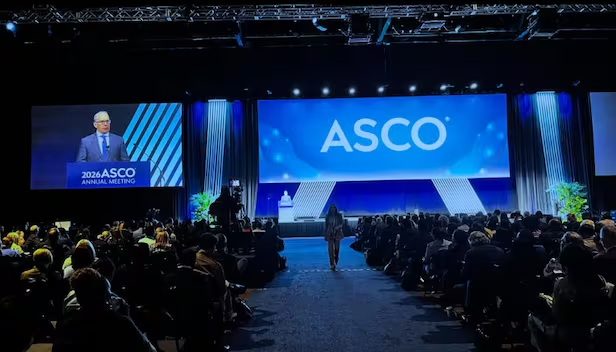
The 2026 American Society of Clinical Oncology (ASCO) Annual Meeting was held in Chicago from May 29 to June 2, 2026.
As one of the most influential academic conferences in global oncology, ASCO has long been regarded as a key indicator of worldwide innovation in cancer drug development.
According to publicly available information, a total of 13 studies from 12 Chinese innovative pharmaceutical companies were selected for the Plenary Session and Late-Breaking Abstract (LBA) sessions this year, marking a historic milestone for Chinese biopharma companies at ASCO.
In this article, Chinese pharmaceutical wholesaler DengYueMed provides an overview of the most closely watched Chinese innovative drug developments presented at the conference, including PD-1/VEGF bispecific antibodies, IO 2.0 therapies, and bispecific ADCs, as well as the latest breakthroughs from companies such as Akeso, Innovent Biologics, Biokin Pharmaceutical, and Dizal Pharmaceutical on the global oncology innovation stage.
Chinese Innovative Drugs Truly Step Onto the Global Center Stage for the First Time
Among all Chinese companies participating in this year’s ASCO meeting, Akeso attracted some of the greatest attention.
Its Phase III HARMONi-6 study, comparing ivonescimab plus chemotherapy versus tislelizumab plus chemotherapy, was officially selected for the ASCO Plenary Session, making it the only Chinese study included in this year’s highest-profile conference segment.
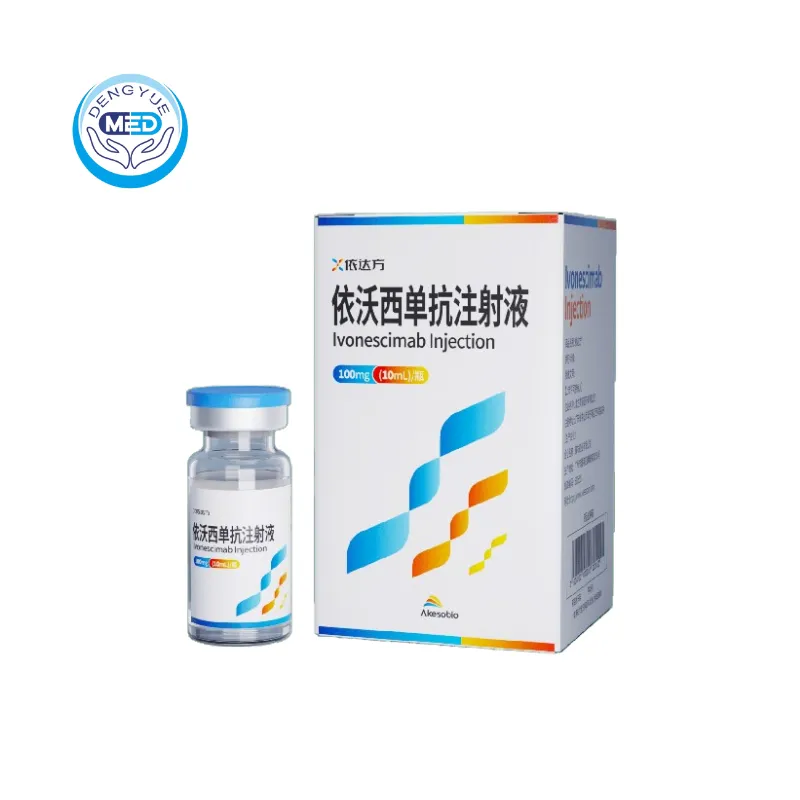
Previously, interim analysis results from HARMONi-6 were presented at the 2025 ESMO Congress:
- Median PFS in the ivonescimab plus chemotherapy group reached 11.14 months
- Median PFS in the tislelizumab plus chemotherapy group was 6.90 months
- Absolute PFS improvement was 4.24 months
- HR = 0.60, P < 0.0001
In first-line squamous non-small cell lung cancer (NSCLC), PD-1 plus chemotherapy has already become an established standard treatment, with intense clinical and commercial competition.
The significant PFS advantage demonstrated by ivonescimab in this setting has already drawn considerable industry attention.
At this year’s ASCO Plenary Session, the study will further disclose overall survival (OS) data, which is widely regarded as the most critical milestone for HARMONi-6.
Whether the PD-1/VEGF bispecific antibody can successfully translate PFS improvement into OS benefit will directly impact ivonescimab’s future positioning in first-line NSCLC treatment worldwide.
Importantly, HARMONi-6 is a Phase III clinical trial conducted in China, while the control arm of tislelizumab plus chemotherapy is already recognized as an important recommended regimen in Chinese NSCLC treatment guidelines.
This means Akeso is directly challenging the existing domestic standard of care in China.
If the OS benefit is ultimately confirmed, ivonescimab could enter global discussions as a potential new first-line standard therapy option.
The IO 2.0 Era: Chinese Companies Accelerate Rapidly
PD-1 monoclonal antibodies once represented the first major commercialization wave for China’s innovative drug industry.
However, with increasing indication saturation, declining prices, and growing homogeneity, traditional PD-1 products are no longer sufficient to support the next phase of high-growth expansion.
The global market is now searching for the next generation of immunotherapy beyond Keytruda.
At ASCO 2026, Chinese companies are collectively showcasing their new IO 2.0 strategies.
PD-1/VEGF Bispecific Antibodies Continue to Gain Momentum
In addition to Akeso’s ivonescimab, 3SBio’s SSGJ-707 has also attracted significant attention.
PD-1/VEGF bispecific antibodies simultaneously block both PD-1 and VEGF pathways, aiming to enhance anti-tumor immune responses by improving the tumor microenvironment and strengthening immune activation.
SSGJ-707 has already received Breakthrough Therapy Designation from China’s NMPA and FDA IND approval in the United States.
3SBio has also licensed ex-China rights for the drug to Pfizer.
At this year’s ASCO meeting, SSGJ-707 is expected to present:
- Updated Phase II monotherapy data in PD-L1-positive NSCLC
- Phase II data in combination with chemotherapy for advanced endometrial cancer
These results are expected to directly influence the pace of future global Phase III development.
PD-1/IL-2 Bispecific Therapies Enter Clinical Validation
Innovent Biologics’ IBI363 targets the PD-1/IL-2 bispecific fusion protein space.
By simultaneously blocking PD-1 inhibitory signaling and selectively activating PD-1-positive effector T cells, IBI363 aims to improve efficacy while reducing the toxicity traditionally associated with IL-2 therapies.
At ASCO 2026, Innovent will present updates including:
- Later-line data in IO-resistant NSCLC
- Proof-of-concept combination chemotherapy data in first-line NSCLC
- The design of the global Phase III MarsLight-11 registration study
This reflects how Chinese companies are beginning to shift from “PD-1 followers” toward globally innovative IO pioneers.
Trispecific Antibodies and Additional IO Mechanisms Advance Simultaneously
CStone Pharmaceuticals’ CS2009 is focused on the PD-1/VEGFA/CTLA-4 trispecific antibody space.
Compared with traditional PD-1/VEGF bispecific antibodies, the addition of CTLA-4 aims to enhance immune activation while potentially reducing peripheral toxicity.
In addition:
- Zelgen’s PD-1/TIGIT bispecific antibody ZG005
- Hengrui’s PD-L1/TGF-β bispecific antibody
- Leads Biolabs’ PD-1/4-1BB bispecific antibody LBL-024
will also present major updates at ASCO.
Chinese biopharma companies are rapidly strengthening their presence in the IO 2.0 era.
Bispecific ADCs Become a New ASCO Highlight
ADC therapies have already become one of the most crowded areas in global oncology drug development.
Popular targets such as HER2, TROP2, HER3, and B7-H3 continue to gain momentum, while single-target ADCs are finding it increasingly difficult to establish meaningful differentiation.
Against this backdrop, bispecific ADCs have emerged as one of the industry’s next major directions.
At ASCO 2026, bispecific ADCs made their first collective appearance on the global stage.
According to publicly released abstracts:
- Six bispecific ADCs globally presented clinical data for the first time
- Five of them originated from Chinese companies
Participating companies include:
- Biokin Pharmaceutical
- Alphamab Oncology
- Xadcera
- Chia Tai Tianqing Pharmaceutical
- Doma Biopharmaceutical
These programs cover multiple cutting-edge target combinations, including EGFR×HER3, TROP2×HER3, MUC1×HER3, and EGFR×c-Met.
Biokin Pharmaceutical Leads Globally
Biokin Pharmaceutical’s iza-bren is currently among the most advanced bispecific ADCs worldwide.
Its EGFR×HER3 bispecific ADC has already submitted marketing applications in China for nasopharyngeal carcinoma and esophageal squamous cell carcinoma, making it the world’s first bispecific ADC to file for regulatory approval.
This year’s ASCO meeting will feature the first presentation of its Phase III China study in recurrent or metastatic esophageal squamous cell carcinoma.
Alphamab Oncology Targets TROP2×HER3
Alphamab Oncology’s JSKN016 is the world’s first TROP2×HER3 bispecific ADC to enter clinical development.
The company will present Phase I data in HER2-negative advanced breast cancer.
Compared with traditional TROP2 ADCs, JSKN016 aims to improve tumor coverage and delivery efficiency by incorporating HER3 targeting.
More Chinese Companies Move Toward the Global Frontier
Xadcera’s DM002, Chia Tai Tianqing’s TQB6411, and Doma Biopharmaceutical’s DM005 are also advancing programs targeting:
- MUC1×HER3
- EGFR×c-Met
and other emerging directions.
With the collective debut of bispecific ADCs at ASCO, Chinese companies are increasingly competing for leadership in the next generation of ADC technologies.
Chinese Innovative Drugs Enter the Core of Global Pharmaceutical Competition
In the past, Chinese innovative drugs primarily appeared at international academic meetings through poster presentations.
However, at ASCO 2026, Chinese companies have increasingly entered the conference’s most prestigious segments, including:
- Plenary Session
- Late-Breaking Abstract (LBA)
From Akeso’s ivonescimab entering the Plenary Session, to the collective appearance of IO 2.0 pipelines from Innovent, 3SBio, and CStone, as well as the rapid rise of bispecific ADCs, Chinese innovative drugs are evolving from “participants” into “global competitors.”
This not only reflects growing international recognition of China’s drug innovation capabilities, but also signals that Chinese biopharma companies are beginning to enter the core arena of global oncology innovation.
Looking ahead, the continued global influence of Chinese innovative drugs will depend on:
- Advanced technological innovation
- Global multi-center clinical development capabilities
- International commercialization infrastructure
- Long-term real-world clinical value validation
At the same time, as more Chinese innovative drugs gain global visibility, international patients are paying increasing attention to access channels for Chinese innovative therapies, pharmaceutical distribution systems in China, and cross-border drug services.
DengYueMed continues to monitor developments in China’s innovative drug industry and provides international patients with information related to Chinese innovative therapies and pharmaceutical access.
Related Articles
- Inside China's Peptide Manufacturing Industry
- China's International Medical Services Continue to Upgrade
- The Rise of China's Biopharma Industry
Conclusion
ASCO 2026 may be remembered as a turning point for China’s innovative pharmaceutical industry.
From the Plenary Session debut of ivonescimab to the emergence of IO 2.0 therapies and the global rise of bispecific ADCs, Chinese biopharma companies are no longer simply participating in international innovation—they are increasingly helping shape its future.
As innovation capabilities continue to strengthen and global development strategies mature, Chinese pharmaceutical companies are expected to play an increasingly influential role in the next decade of oncology drug development worldwide.