Discover the five leading Chinese AI drug discovery companies transforming pharmaceutical innovation through artificial intelligence, generative AI, robotics, and computational biology. From XtalPi and Insilico Medicine to BioMap and Galixir, China's AI-powered biotech sector is rapidly becoming a major force in global drug development.
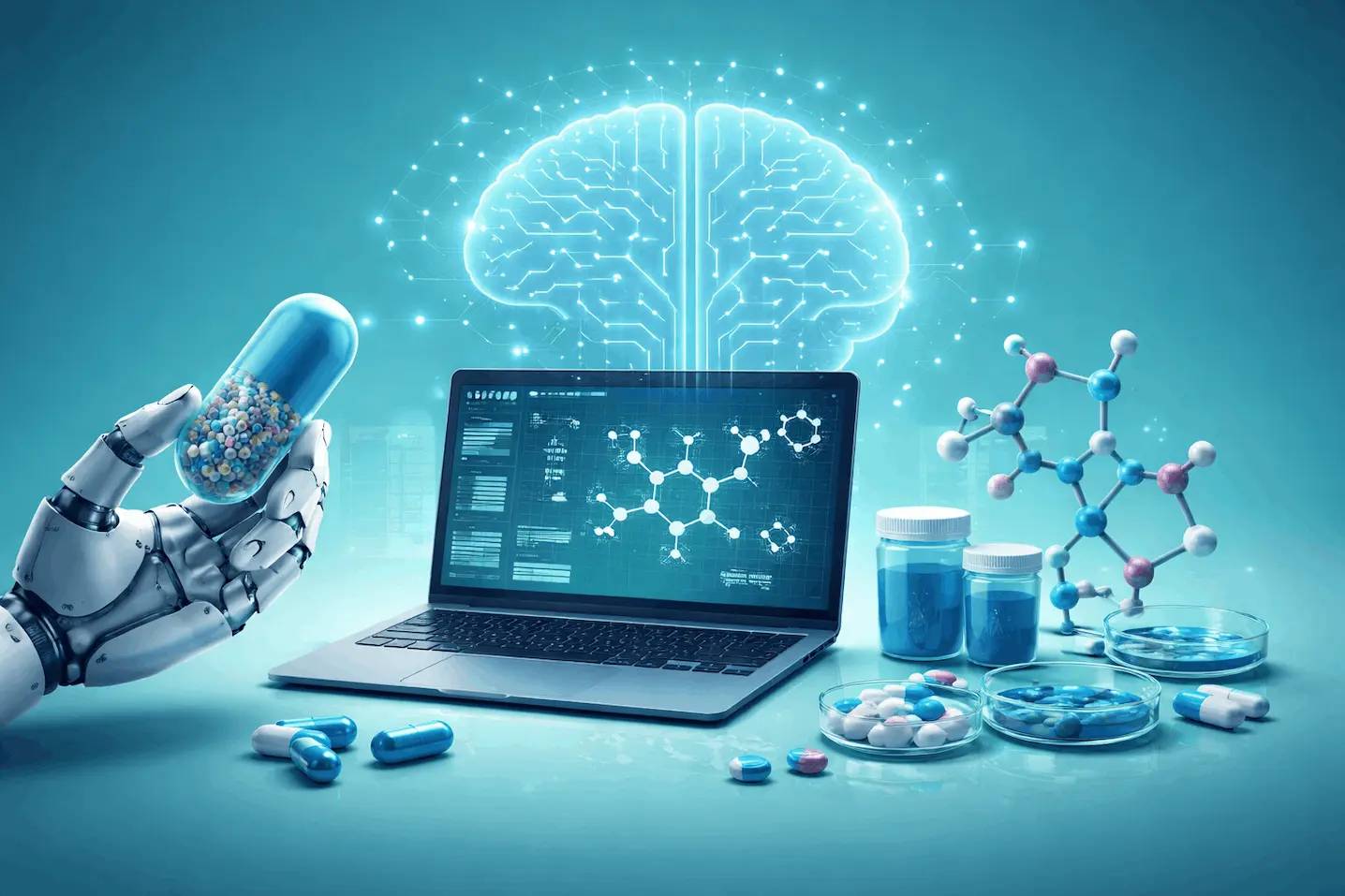
AI-Driven Drug Discovery: Top 5 Chinese AI Drug Discovery Companies
Over the past few years, the global AI drug discovery industry has experienced rapid financing, soaring valuations, and a subsequent return to rational market expectations. From AlphaFold's breakthrough in protein structure prediction to the integration of generative AI, large language models (LLMs), and machine learning into drug discovery, clinical research, and molecular design, AI-driven drug discovery has evolved beyond a capital-driven concept.
Today, the industry's focus has shifted to a fundamental question:
Can AI truly shorten drug development timelines, improve success rates, and ultimately accelerate the launch of innovative medicines?
For China, an increasing number of domestic AI drug discovery companies are entering the global market through proprietary technology platforms, internally developed pipelines, and strategic collaborations with multinational pharmaceutical companies, continuously validating the industrial value of AI technologies.
In this article, DengYueMed reviews the current landscape of China's leading AI drug discovery companies and analyzes the future development trends of the country's AI-driven pharmaceutical industry.
AI Drug Discovery Is Entering the "Value Validation" Stage
Traditional innovative drug development typically requires more than 10 years and investments averaging several billion U.S. dollars, while the overall clinical success rate remains below 10%.
A significant proportion of this time is spent during the early discovery phase, including:
- Target identification
- Compound screening
- Lead optimization
AI technologies leverage massive biological datasets through machine learning, deep learning, and generative algorithms to rapidly analyze disease mechanisms, protein structures, and small-molecule designs, significantly improving the efficiency of candidate drug discovery.
Today, AI has been widely applied across multiple stages of drug research and development, including:
- Target discovery
- Molecule design and optimization
- ADMET prediction
- Clinical trial design
- Biomarker discovery
- Patient stratification
Notably, an increasing number of AI-designed drug candidates worldwide have entered clinical development, with several progressing into Phase II and even Phase III clinical trials.
This demonstrates that AI is no longer merely an auxiliary research tool but is becoming an integral part of the core drug discovery process.
Meanwhile, industry evaluation standards have also evolved.
Investors are no longer focused solely on AI platforms themselves, but increasingly emphasize whether companies can continuously generate clinically valuable pipelines and establish sustainable commercial partnership models.
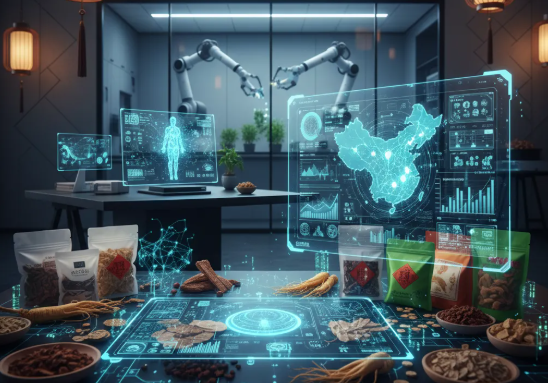
Top 5 Chinese AI Drug Discovery Companies
1. XtalPi: Building a Digital R&D Platform with AI and Robotics
XtalPi is one of China's earliest platform companies dedicated to AI-powered drug discovery and is among the country's most internationally recognized AI pharmaceutical enterprises.
The company integrates:
- Artificial intelligence
- Quantum physics-based computation
- High-performance computing
- Automated robotic laboratory systems
to establish a comprehensive digital platform covering the entire drug development process.
Today, its business extends beyond innovative drug discovery to include:
- Solid-state research
- Formulation development
- Materials science
- Automated laboratory solutions
XtalPi has established collaborations with leading global pharmaceutical companies such as Pfizer, Eli Lilly, Johnson & Johnson, and Merck.
Compared with software-only AI platforms, XtalPi places greater emphasis on a closed-loop system combining AI prediction with automated experimental validation.
2. Insilico Medicine: One of the World's Leading AI Drug Discovery Companies
Although Insilico Medicine operates as a globally oriented company, an important portion of its research and development team is based in China, making it widely recognized as one of China's representative AI drug discovery enterprises.
The company's key strength lies in its integrated AI platform covering:
- Target discovery
- Molecular design
- Clinical prediction
Several AI-designed drug candidates developed by Insilico Medicine have entered clinical trials.
Among them, its candidate for idiopathic pulmonary fibrosis (IPF) became one of the world's landmark examples of an AI-discovered drug entering clinical development.
Today, the company has established partnerships with Sanofi, Fosun Pharma, and numerous other pharmaceutical companies.
3. DP Technology: Empowering Molecular Simulation and Life Sciences with AI
DP Technology initially positioned itself as an AI for Science (AI4S) company, focusing on:
- Molecular simulation
- Computational chemistry
- Materials science
In recent years, the company has expanded its technologies into life sciences and innovative drug discovery, utilizing foundation models, molecular dynamics simulation, and high-performance computing to improve drug screening efficiency.
Compared with conventional AI platforms, DP Technology places greater emphasis on its underlying scientific computing capabilities.
Its technologies are widely applied not only in pharmaceutical research but also across the energy, chemistry, and advanced materials industries.
4. BioMap: Building Foundation Models for Life Sciences
BioMap has emerged as one of China's most closely watched AI life science companies in recent years.
The company introduced the concept of Life Science Foundation Models, aiming to train large-scale biological foundation models using massive biological datasets to support:
- Protein engineering
- Antibody discovery
- Gene therapy
- Innovative drug development
Rather than focusing solely on individual drug discovery projects, BioMap is committed to building AI infrastructure for life sciences.
This strategy represents an important trend in AI drug discovery—the evolution from standalone algorithms toward universal biological foundation models.
5. Galixir: Focusing on Generative AI for Drug Design
Galixir is among the earliest Chinese companies dedicated to generative AI-driven drug discovery.
The company focuses on developing generative AI models capable of rapidly creating promising small-molecule structures and combining them with medicinal chemistry optimization to improve the efficiency of lead compound discovery.
While continuously advancing its proprietary pipeline, Galixir is also actively pursuing international collaborations to explore new AI-driven drug development models.
As generative AI technologies continue to mature, platforms of this type are expected to further improve innovative drug discovery efficiency while reducing early-stage research costs.
China's Competitive Advantages in AI Drug Discovery Are Becoming Increasingly Evident
Compared with Europe and the United States, China's AI drug discovery industry started later but has developed remarkably quickly in recent years.
Several key competitive advantages include:
Abundant Biological Data
China possesses extensive life science data resources and an increasingly mature innovative drug development ecosystem, providing a strong foundation for AI model training.
Strong AI Infrastructure
The country has achieved significant progress in:
- Artificial intelligence
- Large language models
- High-performance computing
allowing AI technologies to be translated more rapidly into pharmaceutical innovation.
Rapidly Growing Biotech Industry
An increasing number of biotechnology companies now view AI platforms as essential R&D tools, accelerating AI integration into drug discovery.
Chinese AI drug discovery companies are also expanding international collaborations through:
- Licensing-out agreements
- Co-development partnerships
- Global commercialization models
AI Is Driving Drug Discovery into a New Era
The development of AI-driven drug development is propelling innovative drug research from a traditional experience-driven model toward a new paradigm powered by:
- Data
- Algorithms
- Intelligent decision-making
From early proof-of-concept studies to the growing number of AI-designed drugs entering clinical trials, the industry has entered a phase where real-world results increasingly validate technological value.
With the continued integration of:
- Large-scale models
- Automated experimental platforms
- Computational biology
- Robotics
AI is expected to further shorten drug development cycles, improve success rates, and accelerate the entry of innovative therapies into clinical development.
At the same time, greater R&D efficiency means patients worldwide may gain faster access to new treatment options.
As a platform dedicated to tracking global pharmaceutical innovation, DengYueMed continues to follow developments in AI-driven drug discovery, precision medicine, and cutting-edge biotechnology.
The convergence of artificial intelligence and life sciences is no longer a future vision—it is actively reshaping the future of medicine today.