Advanced drug delivery systems are reshaping pharmaceutical innovation by improving targeting, bioavailability, patient adherence, and long-term therapeutic outcomes. This article reviews six major drug delivery technologies driving China's next generation of innovative medicines.
Beyond Tablets and Infusions: Advanced Drug Delivery Systems in China
For decades, oral tablets and injectable infusions have dominated clinical medicine. While these conventional dosage forms remain indispensable, they are not always able to deliver drugs precisely where they are needed, maintain optimal therapeutic concentrations, or maximize patient adherence.
As pharmaceutical science advances, drug innovation is no longer limited to discovering new active ingredients. Increasingly, attention is shifting toward how medicines are delivered. Modern drug delivery systems are designed to improve efficacy, reduce toxicity, enhance convenience, and expand treatment possibilities for complex diseases.
China's pharmaceutical industry has made significant progress in developing innovative drug delivery technologies, supported by advances in materials science, nanotechnology, biomedical engineering, and precision medicine. These platforms are becoming an important component of the country's innovative pharmaceutical ecosystem.
Why Drug Delivery Matters
Drug efficacy depends not only on the molecule itself but also on whether it reaches the intended target at an effective concentration and for an appropriate duration.
Advanced drug delivery systems aim to address challenges such as:
- Poor bioavailability
- Rapid drug degradation
- Frequent dosing
- Systemic side effects
- Low patient compliance
- Difficulty targeting specific tissues
By optimizing the delivery process, these technologies help improve both clinical outcomes and patient experience.
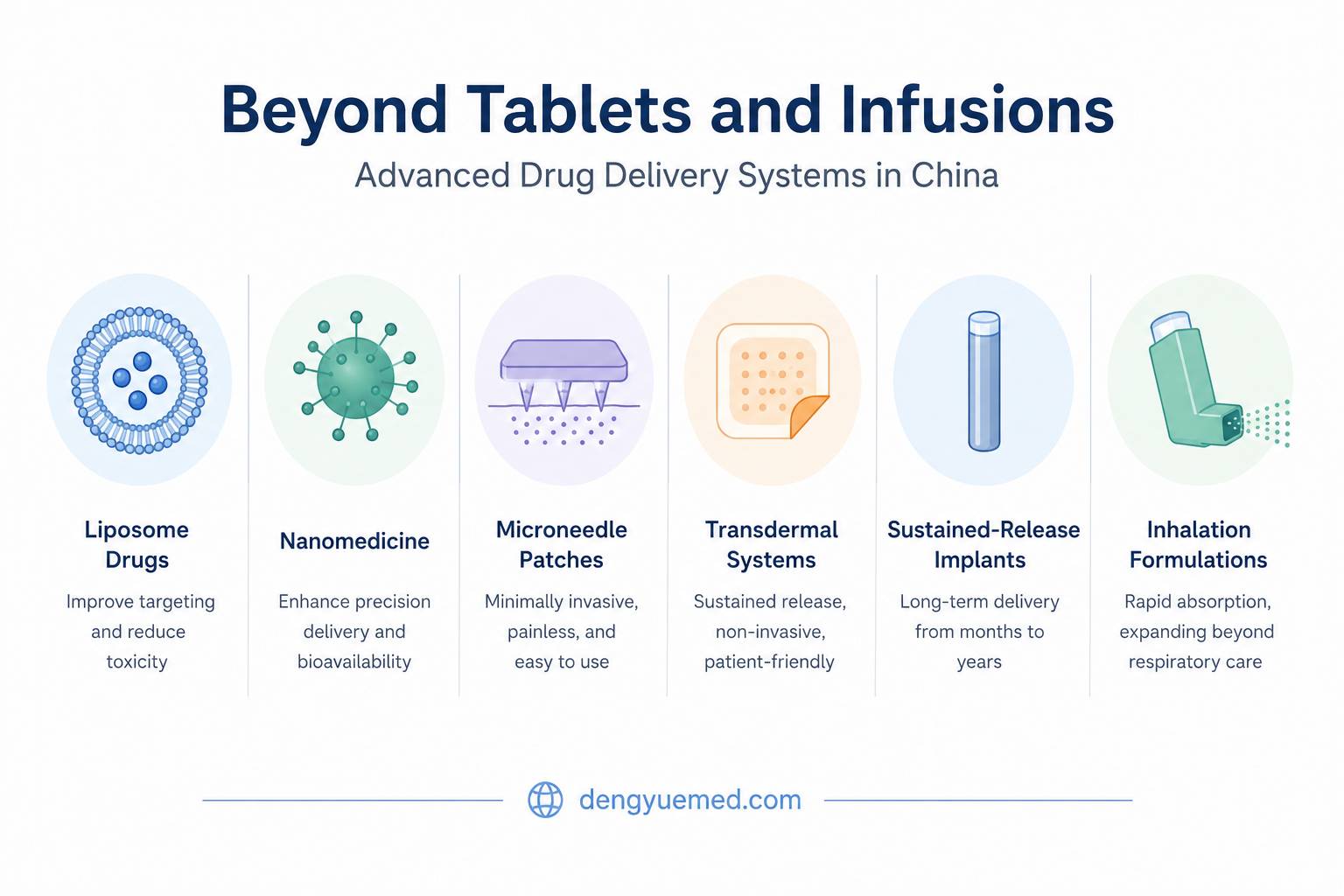
1. Liposome Drug Delivery
Liposomes are microscopic vesicles composed of phospholipid bilayers that encapsulate therapeutic agents.
Advantages
- Improve drug targeting
- Reduce systemic toxicity
- Enhance circulation time
- Protect unstable compounds
Liposomal formulations have become particularly important in oncology, infectious diseases, and antifungal therapy. Several liposomal anticancer drugs have already become standard treatments worldwide.
2. Nanomedicine
Nanomedicine applies nanoscale materials to improve drug transport and release.
Nanoparticles can be engineered to:
- Increase drug solubility
- Improve cellular uptake
- Achieve controlled release
- Target tumors through enhanced permeability
- Deliver multiple therapeutic agents simultaneously
China has rapidly expanded research in nanotechnology-enabled pharmaceuticals, particularly in cancer treatment, gene therapy, and precision medicine.
3. Microneedle Patches
Microneedle patches represent one of the most promising minimally invasive drug delivery technologies.
Unlike traditional injections, microneedles penetrate only the outer layer of the skin, delivering drugs painlessly while avoiding major blood vessels and nerves.
Potential applications include:
- Vaccines
- Diabetes therapy
- Hormone replacement
- Cosmetic medicine
- Biologics
Advantages include:
- Minimal pain
- Self-administration
- Improved patient compliance
- Reduced medical waste
4. Transdermal Drug Delivery Systems
Transdermal patches deliver medications through the skin into systemic circulation.
Compared with oral administration, they can avoid first-pass liver metabolism and provide more stable plasma drug concentrations.
Common clinical applications include:
- Pain management
- Hormone therapy
- Smoking cessation
- Cardiovascular disease
- Neurological disorders
Researchers are also developing next-generation smart transdermal systems capable of responsive and programmable drug release.
5. Sustained-Release Implants
Implantable drug delivery systems provide continuous medication release over weeks, months, or even years.
These systems are widely investigated for:
- Ophthalmology
- Oncology
- Contraception
- Psychiatry
- Chronic pain
- Endocrine disorders
Benefits include:
- Long-term therapeutic stability
- Reduced dosing frequency
- Improved adherence
- Lower fluctuation in drug concentrations
6. Inhalation Drug Delivery
Although traditionally associated with respiratory diseases, inhalation technologies are expanding into broader therapeutic fields.
Modern inhalation formulations are being investigated for:
- Pulmonary hypertension
- Diabetes
- Vaccination
- Gene therapy
- Systemic biologics
The lungs provide a large absorptive surface area, enabling rapid drug absorption and potentially reducing systemic exposure.
China's Growing Innovation in Drug Delivery
China has become an increasingly important contributor to advanced pharmaceutical formulation technologies.
Key drivers include:
- Rapid growth of innovative pharmaceutical companies
- Strong government support for high-end drug development
- Expansion of nanotechnology research
- Advances in biomaterials engineering
- Integration of artificial intelligence into formulation design
- Increasing collaboration between academia and industry
Many Chinese pharmaceutical companies are now developing proprietary drug delivery platforms alongside innovative therapeutics, creating additional competitive advantages in the global pharmaceutical market.
Future Trends
Drug delivery systems are expected to become increasingly intelligent and personalized.
Emerging directions include:
- AI-assisted formulation optimization
- Stimuli-responsive drug release
- Precision nanomedicine
- Targeted biologic delivery
- Gene and RNA delivery platforms
- Personalized implantable systems
As biologics, gene therapies, and precision medicines continue to expand, advanced delivery technologies will play an increasingly important role in translating scientific discoveries into effective clinical treatments.
Conclusion
Modern pharmaceutical innovation extends far beyond discovering new drug molecules. The ability to deliver therapies safely, precisely, and efficiently has become a defining factor in clinical success.
From liposome formulations and nanomedicine to microneedles, transdermal systems, sustained-release implants, and inhalation technologies, advanced drug delivery platforms are reshaping the future of medicine. China is emerging as an important contributor to this transformation through continued investment in pharmaceutical research, engineering, and innovative drug development.
DengYueMed continues to monitor global pharmaceutical innovation, advanced drug delivery technologies, and emerging therapeutic platforms, helping healthcare professionals, industry partners, and patients stay informed about the next generation of medical advances.